_edited.jpg)
Lure Fishing in Lyme Regis

Introduction
We love lure fishing!! If your idea of a great evening is wandering along a beach, watching the water and not being laden down with loads of gear then Lure fishing might be perfect for you. It's easy to get out for a couple of hours, no need to store or source bait & the whole kit packs down nice and small - perfect for the boot of the car, chucking in the camper van or even travelling abroad. We've always got a travel lure rod in the suitcase....just in case!
When Lure fishing you really feel like you're in charge - not waiting for a fish to come across your bait but actively searching and targeting your chosen species.
The best time to get out with the lure rod is between May & October, although some anglers do lure fish throughout the year.
"There are no bad days in fishing...if you're not catching, then you're learning".
Lyme Regis is fantastic for Lure Fishing. We've got great mixed ground, areas that fish well on all states of the tide & a good variety of species.
Our main target species on the Lures are Bass & Mackerel, but Wrasse, Garfish, Mullet, Scad are also good fun.
We'll explore some of our favourite marks further below.
Sustainable Fishing
We want recreational fishing to be available for generations to come, so encouraging sustainable fishing. Familiarise yourself with minimum take sizes, ideally go by the 'conservation' sizes, which usually allow the fish to complete an extra breeding season.
Bass Minimum Sizes & Rules - taken from Southern IFCA
Recreational fishers are subject to the following rules:
Recreational fishers using rod and line are prohibited from retaining bass in February and March. Catch and release only is permitted during this period.
Outside of February and March, recreational fishers may retain three bass per person, per day.
Bass retained outside of February and March must measure at least 42cm in overall length (the Minimum Conservation Reference Size).
No bass can be taken by fixed or drift nets.
These rules apply when fishing from a boat or from the shore.
Mackerel minimum size is 20cm - however with the species in decline, we tend to keep only what we need and fish over 28cm.
"The finest gift you can give to any fisherman is to put a good fish back, and who knows if the fish that you caught isn't someone else's gift to you?" -- Lee Wulff
Rod & Reel Set Up
How to pick the perfect rod.

When choosing a lure rod there's a few key considerations...
Length, casting weight & action, as well as whether you want a travel friendly version.
Although a little extra length does help with casting distance, our main consideration when choosing the length of a rod is how far from the surface of the water we'll be fishing. To work a lure effectively we need to keep the rod tip down, almost touching the water. For most marks around Lyme an 8-9ft rod is perfect.
The 'action' of the rod refers to how quickly the rod recovers during the cast & retrieve. The faster the action, the stiffer the rod. A medium-fast action will cover most of your general lure fishing without heading into the more expensive rod blanks.
Choosing the casting weight depends on the lure you'd like to use. A rod with a range of around 10g-40g will cover the majority of the lures we use for Bass and Mackerel or a slightly lighter range (such as a 5-21g) would work for many of the Bass lures and then also work for the smaller lures for Mackerel, Scad & Wrasse.
The heavier rod with heavier lures will give you more casting range & make it easier casting in windy conditions, whereas a lighter rod is perfect for fishing closer to shore in calm conditions.
Matching up a reel

Reels are a really important part of your set up. The right reel will balance a rod, making your set up feel lighter and easier to use for extended periods of time. Getting the right line lay will improve your casting distance and ensuring your reel has infinite anti-reverse will help prevent slack line being wound on whilst working the lures. There are some budget reels, but we do recommend just jumping up a little in price to get one with the features above...trust us, it'll make your fishing experience much more enjoyable. We're not talking crazy money, starting at around £40 will get you a good reel to get you started.
When choosing a reel, it's ideal if you can put the reel on your chosen rod before you buy, so you can make sure it feels well balanced, the weight should be shifted back so the set up doesn't feel too 'tip heavy'.
We're always happy to spend time in store showing you different options & discussing what you need, matching up rods & reels and making sure you have the perfect set up.
Braid vs Mono - what line is best for me?

Line really depends on your experience...and your budget!
For those new to lure fishing, or even to casting, we recommend a monofilament line. It's a lot more forgiving, much cheaper and knots are nice and simple. However - the diameter is much larger, so you will lose some casting distance. It is quite stretchy, so you will lose some action on the lures, and it's less UV stable, so you will need to replace your line more frequently.
Braid has a much lower diameter which increases your casting distance and the line does cut through the water much better. There's virtually no stretch so every action you make with the rod tip will be transferred to the lure. Although it is more expensive you won't have to replace the braid for years. When using braid you will need a clear leader, ideally fluorocarbon, of a couple of feet. The best knot to use is the FG knot, which gives a strong, smooth, low profile join.
Whether you go for braid or mono, go for the thinnest line you can get away with. 10lb-12lb for mono and anything up to 30lb for braid.
Mono | Braid | ||
Pros | Cons | Pros | Cons |
Cheap | Needs replacing more often | Lasts for years | More expensive |
Easier to use for beginners | Very stretchy - harder to work lures | No stretch - more action on lures | Can be harder to tie for inexperienced anglers |
Can tie straight to lure/lure clip | Picks up more 'drag' in the water | Cuts through the water | Does need a leader |
Accessories & Extras

A backpack, bucket or even carrier bag will do, but to keep everything organised, untangled and accessible we highly recommend lure specific luggage. They really make everything so much simpler. Everything has a place, lures don't get tangled or damaged & you don't reach in to grab something and get a hook in your finger!

Many of the bags have extra pockets and clips, so those pliers or forceps are instantly at hand when you need them and they have multiple trays to keep lures separated and organised.
Soft plastic lures are made from different types of plastic - keeping different types together can cause them to react and melt into each other. So separating them out into trays is essential to not end up with a melty mess!

To keep things lightweight, simple & accessible, we love a tool with more than one function.
These Kinetic split ring pliers are a great example; simple split ring changes, pliers, braid and mono cutters, crimping tool and unhooking all in one. They’ve even got magnetic tips to easily get that awkward swivel or hook out of the corner of the box!
Then the only other tool you really need is a decent hook sharpener. Bumping pebbles or even dragging over sand is enough to blunt a hook. Missing a big take due to a blunt hook is easily avoided.
Any other bits?

Specific Lure clips are a great addition to your lure bag. They make it very easy to swap lures, don't weigh down the front of the lure to ruin the action and allow the lure to move freely. Try and go as small and as light as you can to minimise any disturbance to the lures movement.
Inline single hooks - many lure anglers swap out the treble hooks for single inline hooks...they do need to be specific lure hooks as the eye is the opposite way round than on bait hooks, making the hook sit correctly when attached to the split ring. These hooks make unhooking fish much easier and safer for the fish when returning undersized or unwanted fish.

A cap and polarised sunglasses, suncream, a way for calling for help, a bottle of water & a snack are the last few bits to pack in your kit. The cap helps cut the glare & the polarised glasses will allow you to see the fish! Always have a way of calling for help & if you're planning on fishing more remote marks make sure someone is aware of your location, and your planned return time.
Lures - the best bit!

There's a massive range of lures nowadays and everyone seems to have their favourite go-to lure.
Hard plastics, Soft Plastics, Pre-rigged, Metals & Jigs...it can all get a bit confusing.
Having a selection of different lures at hand gives you the best possible chance of catching. Water clarity, how bright it is, wind speed, depth & sea bed features all influence which lure is best to use at any given time. Being able to clip on a different lure quickly, if there's been no interest in your current choice, is a great way of learning what works in different conditions.
Brightly coloured and lures with rattles can work well where the water is a bit murky and light levels are low, whereas a natural pattern can work better when the water is crystal clear.
Although this article is focusing on fishing in Lyme Regis, our recommended lures will catch all over the country...and indeed the world. By matching your lure to the right conditions, you're lure kit can be used anywhere.
Hard Plastics/Plugs
Hard plastics can seem a bit expensive to get started and build your collection, however we're still using lures from 20 years ago. With a quick hook change every so often, a good quality hard plastic lure will catch for years to come.

Surface/Topwater Lures.
Poppers & Walk the Dog style lures are the primary surface lures. Fantastic for shallow, rocky marks where soft plastics, metals or diving lures are sure to get snagged.
Often around quiet areas you'll see Bass rising to the surface with big swirls and splashes and there's nothing more exciting than casting a lure and seeing the Bass come up to give chase.
These lures need 'working' to get them to look irresistible to even the laziest Bass. Making the lure look like an injured fish makes it seem like an easy meal!
Poppers need a bigger pull on the retrieve to allow it to dart forward producing lots of splash and 'popping'. Walk the Dog style lures require a shorter, sharper jerk of the rod tip to get the lure to zig-zag through the water.
Diving Lures.

As the name suggests these lures dive down on the retrieve due to the lip on the front. Each lure has a different diving depth, usually shown on the package. A very general rule is the larger the lip, the deeper the dive.
Due to the diving nature of these lures, you need to pick your lure and mark wisely, so you don't get snagged in the bottom.
Floating diving lures are a great option, as if they start diving a little too deeply, stop retrieving and they'll float back to the surface.
Soft Plastic Lures
Soft plastic lures offer a cheaper initial cost than a lot of hard plastic, but they don't have the same lifespan. After a few big fish they could get a bit tatty and lose their action, but once you've had those few big fish they'll start to feel like great value!

Soft plastic lures come in a huge variety of sizes, weights, colours and styles. There really is something for all fishing eventualities. When matching up the lure to the casting weight of the rod, make sure you take into account both the head & body weight.
Soft plastics have the hook protruding from the top of the lure, making snags less likely, although remember soft plastic do sink. Weedless soft plastic lures have a hook that is tucked within the body, that then pops out when grabbed by a fish. If there's a lot of weed floating in the water it's a great option to stop bringing back rafts of weed on every cast, although make sure you clear your knot and links of any bits of weed.
When retrieving these lures vary your retrieve speed, this makes the lure rise and fall in the water, covering more ground. The faster you retrieve the closer to the surface you're fishing. Jerk the rod tip down occasionally on the retrieve to give the lure an irresistible 'injured' action.

Soft plastic lures such as the Berkley Cull Shads have been developed for use with scented gels. The honeycomb pattern on the tail, not only allows for a great swimming action, but gives somewhere for the gels to stick. These are a great option when traditional lures just aren't cutting it. Murky water means the fish are having to hunt on scent too.
Metal Lures

Many of you will be familiar with traditional spinners and wedges which still have a place in your lure box; but the new generation of metal lures are definitely worth a look. Lures such as the Savage Seeker or the Abu Solv range have a great action, are weighted towards the back to cast extremely well. They also have spin-stop, meaning if you pause during the retrieve and give a little slack line they spin backwards and down, providing fantastic attraction and prolonging your retrieve. Shore Jigs have a great weight to size ratio, so you've got the weight to get that lure out at distance, but a small enough lure for Mackerel & Wrasse. They usually have 'assist hooks' which makes unhooking much easier.
How to hook those Bass
Watching a Bass come up to your lure is so exciting, but you'll often see them turn away at the last minute. Don't stop! You'll want to instinctively slow down to give the Bass a chance to 'catch up', but they'll often follow for a look, turn away and then hit it hard from the side or underneath. If you were an injured fish with a Bass on your tail, you'd swim like crazy...and that's exactly what your lure should do.
Where to fish?
Some of our favourite Lure Fishing marks in Lyme Regis...and some top tips!
If you get a chance, getting down to your chosen fishing mark on a low tide to have a good look at the features & depths is a great way of getting to know any potential snags and anywhere that looks particularly good for a cast. Take some photos from a specific point at the mark. Everything looks very different on a high tide!

Pinhay Bay
7 Rock Point
Monmouth
The Cobb
River Mouth
Broad Ledge
1. Pinhay Bay
Pinhay Bay is a little cove, around a 45 minute walk along the beach, West of Lyme Regis. The cove has ledges and rocks on either side, with deeper water in the middle.
As it's a more secluded area the Bass tend to come right into the shore.
Surface lures are a great option either side of the cove around the rocks and ledges, whereas weighted soft plastics & metals can be used in the deeper areas around the middle of the cove.
Pinhay Bay fishes well on a falling tide & over low. The tide does cut off access, so plan your trip accordingly. We usually walk round as the tide is falling, casting along the way. Once the cove is accessible we fish Pinhay over the fall & turn of the tide and then make our way back; again casting along the beach as we return to Lyme.
Your main species to target with lures here are Bass, Garfish & Wrasse.
Warnings - This mark is the least accessible on our list, it's quite a walk, over pebbles & rocks so be prepared. It can be slippery at times, so good shoes are a must. Good shoes are a must and it's not suitable for people with mobility issues.
As mentioned above this area is cut off by high tide. The western end does still have a beach away from the cliffs at high tide, so although it is safe, it's a long wait to make your way back. So check your tide times when planning your trip.

Our lure picks for Pinhay Bay.
Having such mixed ground & depth gives us a great opportunity to try a wide range of lures here.
Our favourites for Pinhay tend to be natural patterns with a decent range of depths and actions.
Soft plastics - 12cm, 22g Savage V2 eels in Pearl or Khaki or the Westin Sandy Andy 22g in Tobis or Bluetooth.
Metal lures - 28g Savage Seeker ISP or 18g Solv Spirr in fairly natural colours.
Hard plastics - 25g Savage RevMag Walker (Topwater) or the 24g Westin Sandy Fixed Bass (S-Curve, variable depth)
Seven Rock Point
Seven Rock Point is about halfway between Lyme & Pinhay Bay, as you're looking West along Monmouth Beach, it's the first 'point' you see. The mark is very rocky, but is a great low water lure mark. As with Pinhay Bay, you would get cut off on a high tide, so we walk along Momouth Beach as the tide falls, having a few casts on the way down, fish over the Ebb, Slack water and an hour or so on the incoming tide, then walk back. So once again, check tide times & plan accordingly.
This is really solely a Bass mark.
Warnings - the walk is along pebbles & large rocks and can be slippery at times. Good shoes are a must and it's not suitable for people with mobility issues. Once again this point is cut off by a high tide.
Our Lure pick for Seven Rock Point.

Being a shallow, rocky mark our lure selection differs slightly from Pinhay. Metal lures aren't suitable, Topwater lures & weedless lures are your best choice. Again we've gone for natural colours and graphics, but if the water is a bit murky or you're fishing very early or late in the day having a brighter option in the box is always worth it.
Hard plastic, topwater lures such as the Savage Bullet Mullet or the Westin Spot-On Top Water are ideal, staying right on the surface creating lots of splashes and disturbance.
Weedless soft plastics such as the Savage Weedless Minnow & Westin Sandy Andy Weedless are less likely to get snagged in rocks, but offer Bass feeding a little lower in the water something to take.
Monmouth Beach
Monmouth Beach is West of The Cobb, it's a pebble beach with wide, sweeping ledges and reefs with sections of clean ground in between. It is all pretty shallow along the whole stretch and is very much a high tide mark as at low tide the ledges are exposed.
Target species along Monmouth Beach are Bass, Mackerel, Garfish & Wrasse.
Warnings - Monmouth Beach has some steep sections and further West has cliffs close to the shoreline. The exposed ledges on a low tide can be incredibly slippery.

Our Lure pick for Monmouth Beach.
We opt for slightly heavier topwater & weedless lures to give us more casting distance so we can fish right out over the ledges.
Hard plastic lure, like the Savage Surf Walker, the Savage RevMags or the Westin Spot-On Topwater lures offer us the topwater action and the weight to get some distance.
The Savage Weedless Minnows (28g) and Westin Weedless Sandy Andy (24g) give us great distance, but where they're top hook, weedless lures they're less likely to get snagged in the rocks and ledges.
The Solv Piil metal lure does have a chance of getting snagged if you retrieve too slowly, but sometimes a metal lure will catch where others fail so it's a risk we take to hook into a decent fish.
The Cobb
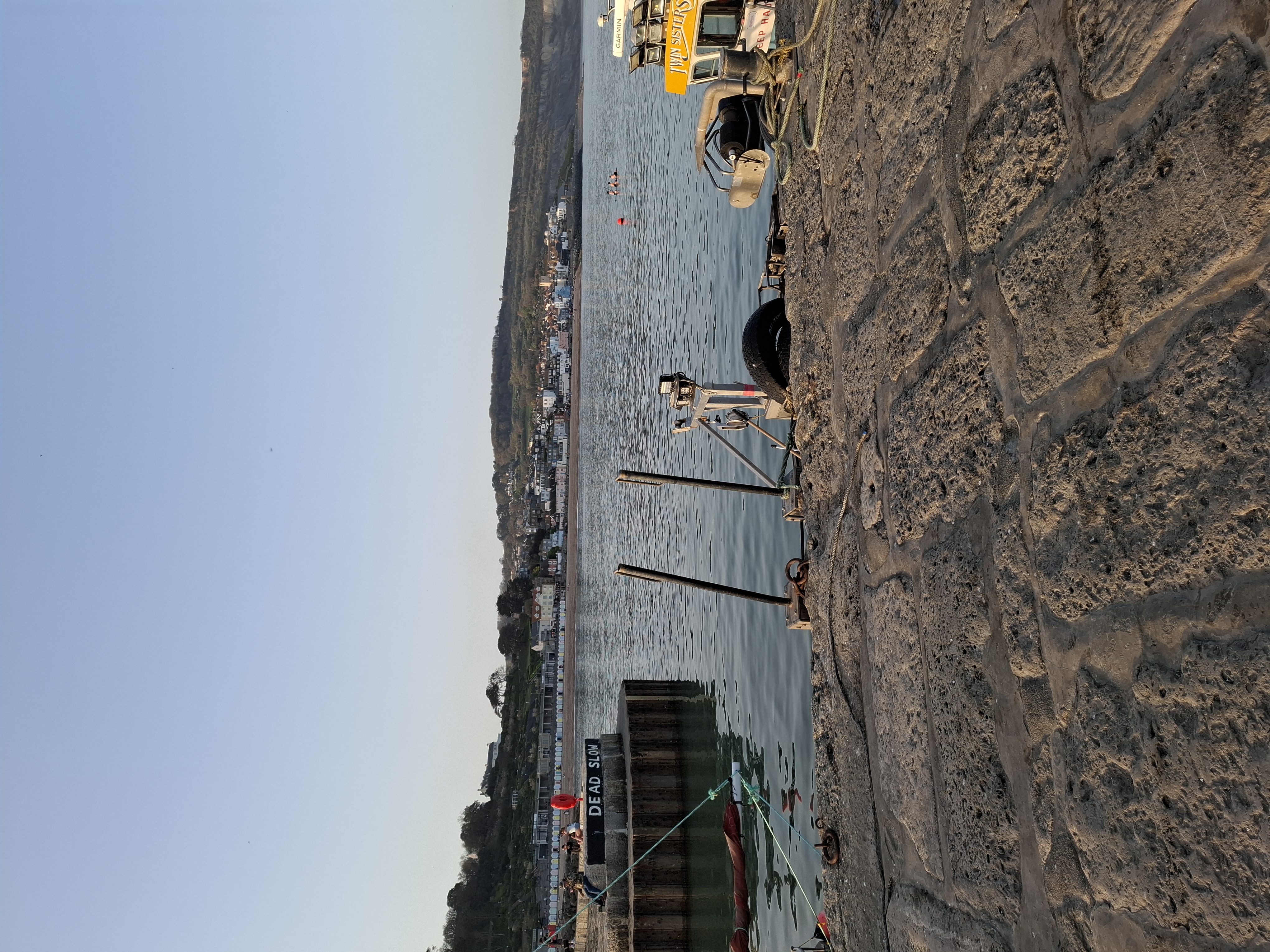
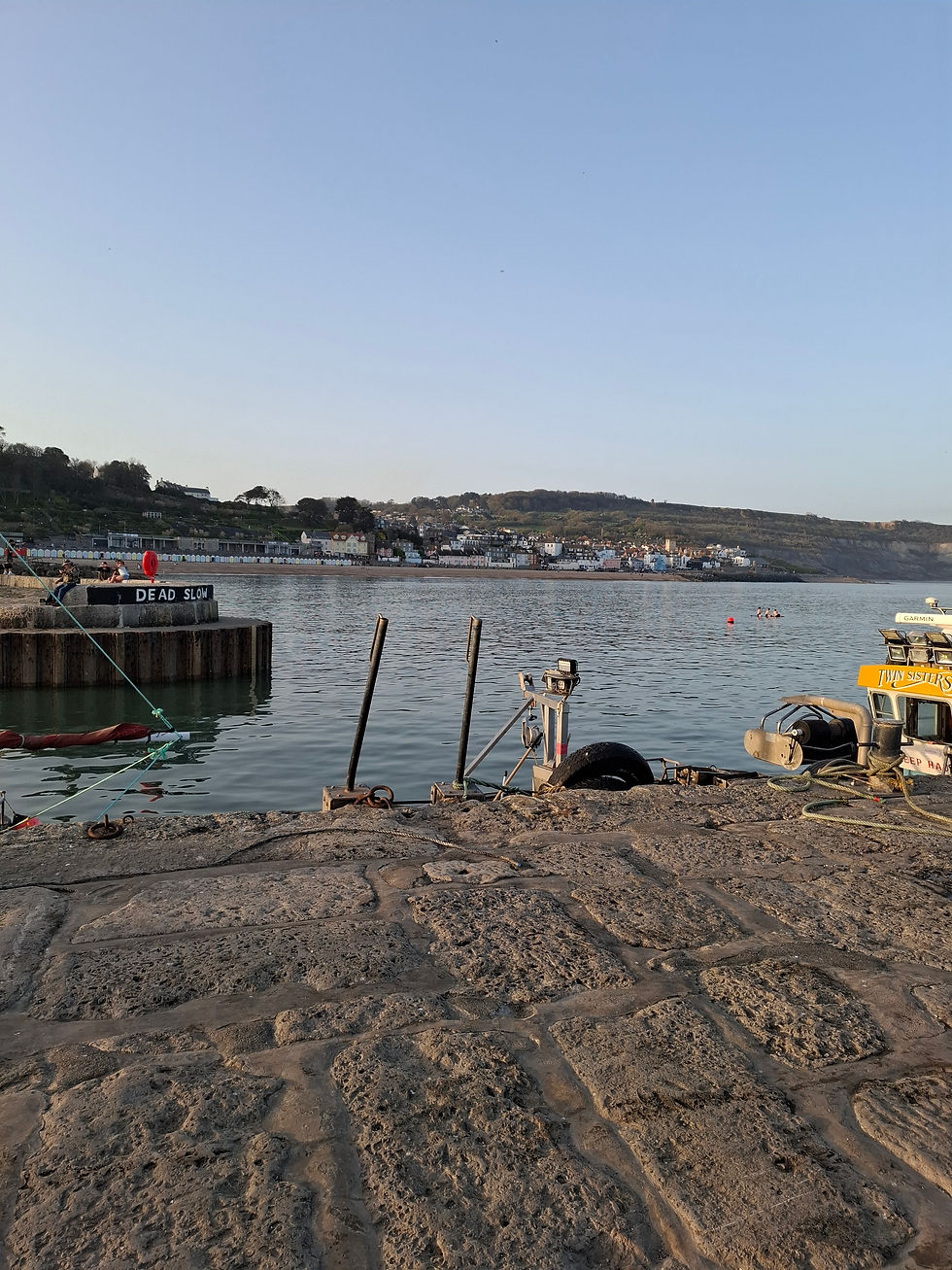
The iconic Cobb - for many an evening fishing on the Cobb is an integral part of their trip to Lyme Regis. We also do a lot of LRF and ultralight fishing from the harbour.
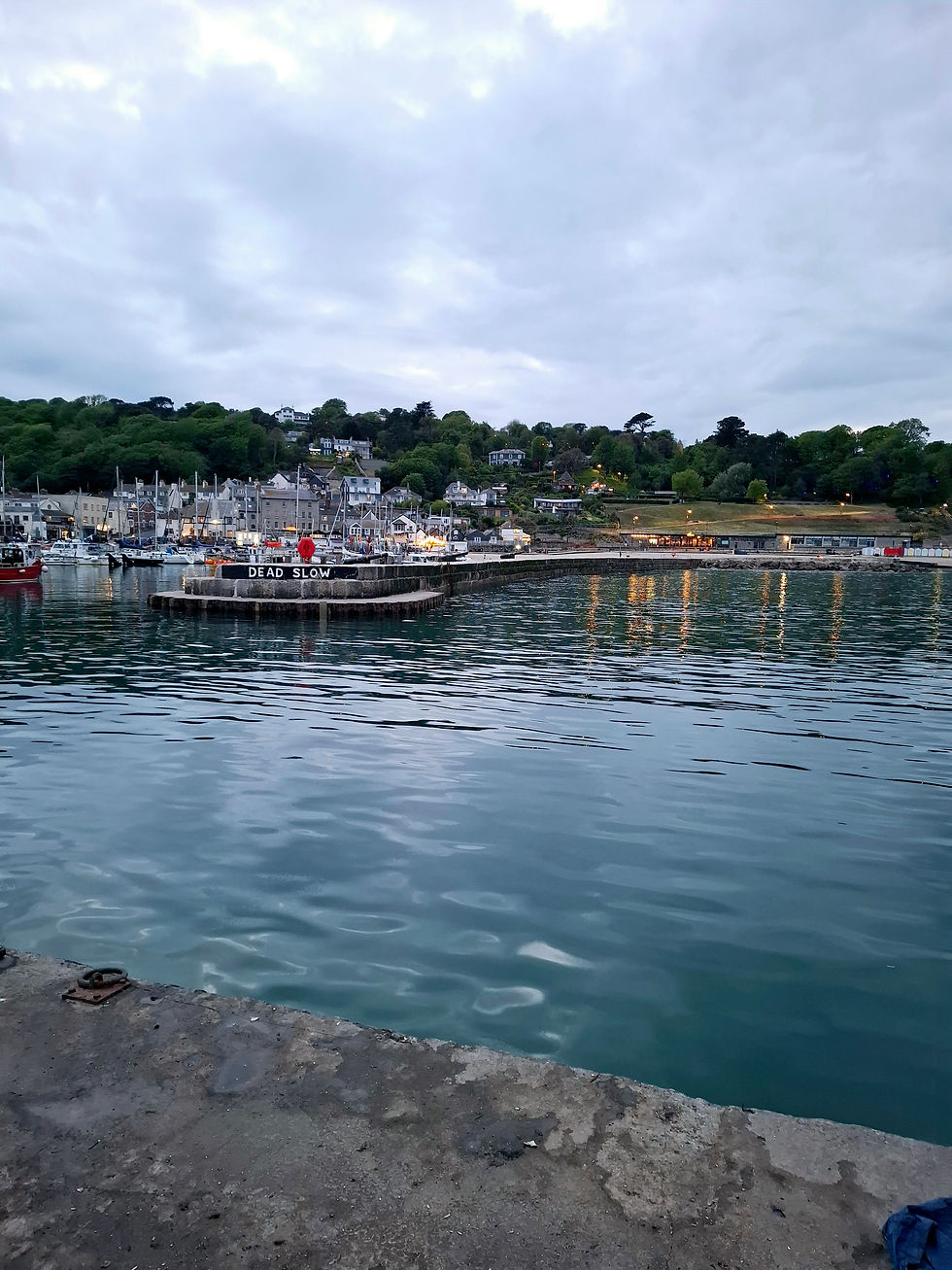
For lure fishing, the Cobb fishes best a couple of hours up to high water and an hour or so after. Early mornings and evenings tend to be the best times if the tide allows it.
Our main target from the Cobb are Mackerel, Scad & Garfish. We do get Bass, especially around the pool area behind the aquarium building, but if Bass is your main target, some of our other marks do produce the larger fish.
A landing net or drop net is a must if you're after the Bass or larger species.
Warnings - Boat traffic does take right of way, so keeping an eye out for boats moving and keep your line out of their way. There aren't railings on much of the Cobb, so being aware of the edge, especially with children or wheelchairs etc is an important consideration.
The Cobb is a working harbour so being respectful of equipment and keeping out of the way of boats unloading catches or coming in to moor up makes it easier and safer for everyone.

Our Lure pick for The Cobb.
As we focus mainly on the Mackerel from the Cobb, our lure selection is mostly smaller metal lures. These lures will still pick up Bass if they're in the area.
The metal lures give us the easiest way of fishing variable depths to find those fish, a slower retrieve will fish deeper and as you speed up the lure fishes progressivley higher in the water. Finding the depth at which the fish are feeding will increase your catch rate.
The Abu Solv range & the Savage Seekers have a great spin-stop action, prolonging your retrieve time and covering more depth of water. Lures like the HTO Yo-Yo, HTO Flip-Flop & Westin F360 shore jigs have a great weight to size ratio, giving you a higher casting range when the fish are keeping their distance from the Harbour.
The River Mouth
The River Lym meets the sea just past the Rock Point Inn, it's a small river but the fresh water entering the sea brings in some really good sized Bass. There is limited space, really only fishable for 2 anglers at a time. There's a set of steps on each side of the river mouth, although these do get a bit slippery, so caution must be taken.
There's large breakwater boulders on either side and there are a few large rocks within the fishing zone.
This mark is fishable over the high tide, 2 hours before high and an hour or so after is the best window. Again, early mornings and later evenings on a high is the ultimate aim. On a good high, casting up under the bridge can produce some monster Bass.
Lure fishing at The River mouth is very much targetted towards Bass.
Warnings - The steps can get very slippery, especially further down, so good shoes and careful footing is a must.

Our pick of lures for The River Mouth.
Because we're fishing from a bit of height, surface lures lose their action at we'd be pulling the nose up. So shallow dive, soft plastics and small metal lures are the lures of choice here.
The Savage Gravity Shallow has a great action and is a super shallow dive lure & the Westin Sandy Fixed can fish nice and shallow on a fast retrieve.
Savage V2 Sandeels or the Westin Sandy Andy lures are a good option for this mark, allowing you a good casting range, top hooked lures and the ability to fish different depths depending on your retrieve.
Small metal lures such as the Abu Blixx or Westin F360 S-Curve again give us a good range of distance and depth.
Broad Ledge
Broad Ledge is on the Eastern edge of Lyme Regis. It's a long, wide expanse of ledge dropping off into deeper water. Much of the ledge is exposed over a low tide where you can see the sheer size of it and all of the features. We fish Broad Ledge over a low tide, walking out onto the ledge and fishing into the deep water on either side. Bass cruise along the edges waiting for the tides and looking for the bait fish taking shelter along the fringes.
For lure fishing, this is just a Bass mark, although over a high it can be great for bait fishing for other species...albeit rather snaggy.
Warnings - the ledges can be slippery and what looks like a patch of weed usually hides a rock pool, so concentrate on your footing. Keep in mind of the incoming tide and make your way back along the ledge. We don't recommend wearing waders...if you do slip off the edge into deeper water, waders will fill with water and pull you down.

Our pick of lures for Broad Ledge.
Because we're fishing right at water level, this is the idea spot to use those surface lures. Really working those lures to get them to zig-zag and roll in the water brings an irresistible action, even Bass full of bait fish can't resist an easy snack.
Our top picks are the Savage RevMags, which automatically adjust the weights inside to give you masses of casting distance, the Savage PopWalker, our trusty Westin Spot-On lures and the Konichi Bass Dude lures.
We really hope you've found this article informative & helpful. If you have any questions get in touch or pop in and we'd be happy to help.
A lot of the products specific to lure fishing in Lyme Regis have been added to a single shop page to make it easier for you to browse. Take a look here.


Comments